Why Construction Invoice Errors Start at 3pm — Not in QuickBooks
May 24, 2026 · 6 min read
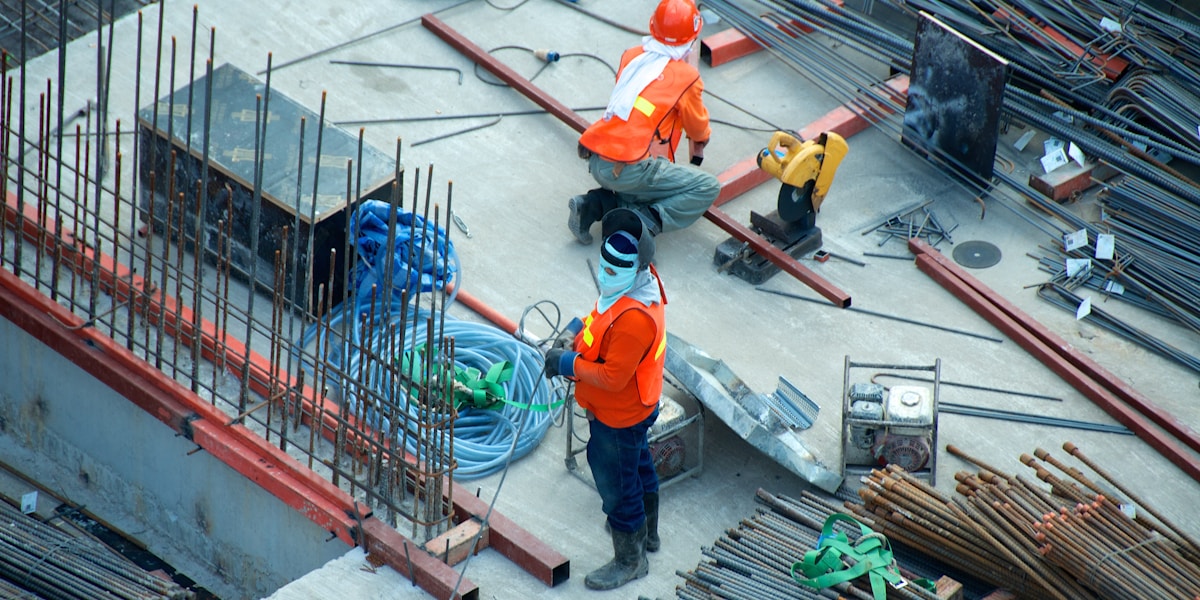
Everyone blames the GC.
The draw is late, the pay app sat for 30 days, the billing department moves slow. And sure — sometimes that's true. GCs are slow payers. That's real. But I've watched enough specialty subcontractors chase the wrong problem that I need to say this directly: most construction invoice errors don't start when you open your billing software. They start at 3pm, on a job site, when your foreman is standing in a gravel parking lot trying to reconstruct who worked where from memory.
I ran field crews for years before I built Scribta. I know what end-of-shift looks like from the inside. And it's not a clean data entry process.
The 3pm Parking Lot Is Where Invoice Errors Are Born
Picture it: 3pm on a commercial mechanical job. You've got eleven guys wrapping up for the day. Your foreman — great tradesman, twenty years in the field, someone you trust completely — is texting you from the parking lot asking how to fill in the timesheet again.
You send him the spreadsheet link. He opens it on a cracked phone screen, squints at the columns, and starts filling in what he thinks people worked. Not what they actually worked. What he remembers — standing in late afternoon heat, physically spent, already running through tomorrow morning's startup checklist in his head.
Those numbers land in your inbox that evening. You skim them over the weekend. By Monday they're in payroll. By Thursday — when you sit down to build the invoice — you're billing the GC off hours that were a parking lot best guess two weeks ago.
That's not a GC problem. That's a data problem. And it started the moment your most important financial inputs got handed off to human memory under pressure.
How Subcontractor Timesheet Mistakes Break Everything Downstream
The brutal thing about subcontractor timesheet mistakes is that they don't stay contained. One bad entry triggers a cascade that touches payroll, certified payroll, job costing, and billing — in that order.
Rodriguez was on the downtown hospital job Thursday, not the airport expansion. The foreman logged him on the wrong cost code because he couldn't remember the right job number and filled in what seemed close enough. Now your certified payroll report doesn't match your billing totals. The GC's project manager flags it during pay app review and kicks it back. You spend a week chasing the source of the discrepancy, correcting payroll records after the fact, and resubmitting the application.
Your draw slips another 30 days. And because the error got caught at billing — not at the timesheet stage — it permanently feels like a billing problem. It isn't. It's a field data problem that's been invisible for two weeks by the time anyone notices it.
Why Construction Labor Tracking Fails at the Source
The reason construction labor tracking breaks down isn't the software subcontractors choose — it's the timing and conditions under which they ask crews to report.
We've built an industry habit of asking people to log hours at the end of a long physical shift, from memory, on a device not built for the field, into a format designed for office workers at desks. Then we wonder why the numbers are wrong.
Your foreman has been on his feet since 5:45am. By 3pm he's running on empty. Asking him to accurately reconstruct eleven people's days — who was on which job, which cost codes applied, who left early, who hit overtime — is fundamentally incompatible with how humans recall detail under physical fatigue.
The fix isn't a better spreadsheet or a weekly reminder email. The fix is capturing data at the moment it's accurate, in a format built for someone standing on a job site with dirty gloves and a dozen other things competing for attention. See how Scribta's field timesheet software makes accurate job-site time capture simple for crews of any size.
Certified Payroll Errors Almost Always Trace Back to Bad Timesheets
For subcontractors doing prevailing wage work, certified payroll errors aren't just an inconvenience — they're a compliance exposure and a payment delay rolled into one.
One misclassified worker. One overtime split that doesn't reconcile. One crew member logged to the wrong project for a day and a half. Any of these can trigger a correction request, a compliance inquiry, or a withheld draw. And in almost every case, if you trace it back far enough, it leads directly to the timesheet — not the payroll software, not the certified payroll report itself, but the raw input data everything else is built on.
When hours are captured correctly at the source — right worker, right job, right classification, right cost code — certified payroll becomes nearly mechanical. The software does its job. When the inputs are bad, no software can save you. The errors just ride the data downstream.
Construction Job Costing Only Works If the Hours Are Right
Here's the part that stings most: every bad timesheet entry is also a bad job costing entry.
You pull the labor hours to see if a job was profitable. They're off — because a crew member's Thursday got logged to the wrong project three weeks ago and slipped through. Your job cost report is wrong. Your estimate-to-actual is off. The decisions you make about how to bid the next similar job are built on numbers that were never accurate to begin with.
Construction job costing is only as useful as the field data feeding it. And field data is only as reliable as the system used to capture it. If that system is a foreman texting from a parking lot, your cost reports are fiction formatted as a spreadsheet.
Fix the Input, and the Invoice Fixes Itself
When we built Scribta, we didn't start with billing. We didn't start with payroll reporting. We started with the single moment where everything either gets right or gets wrong: the moment a crew member logs his hours after his shift ends.
If that moment is accurate — the right job, the right cost code, the right hours, reviewed by a supervisor before it ever hits your desk — then everything downstream gets easier. Payroll runs clean. Certified payroll matches billing. Job costing reflects reality. And when you submit that pay app, every number in it is a number you can defend without scrambling through a month of back-and-forth texts trying to reconstruct what actually happened on a Thursday three weeks ago.
The invoice is just a report card. It's a summary of everything that happened in the field over the past two weeks. If those inputs were wrong, the report card was always going to fail — no matter how good your billing software is. Fix the data at the source, and the invoice takes care of itself.
Ready to stop rebuilding timesheets from memory? Scribta gives specialty subcontractors a faster, more accurate way to capture field hours and get real-time visibility into labor costs — without the end-of-shift guesswork that kills pay apps and delays your draws. Start your free 30-day trial today. No credit card required.